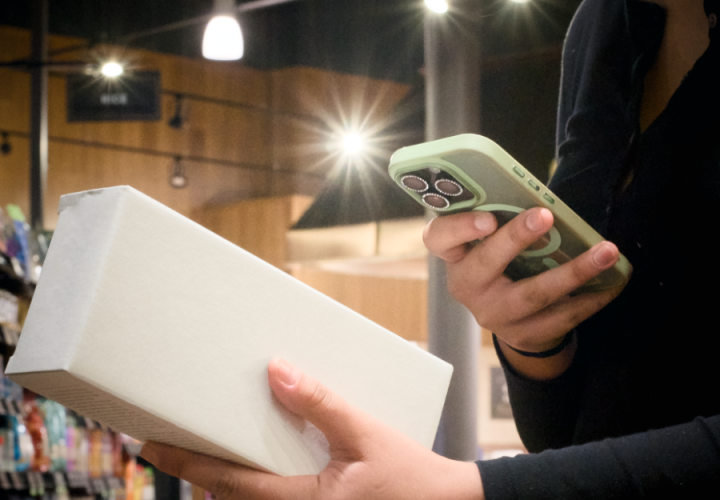
Product in hand.
Questions in mind.

We connect physical products to verified digital information.

| No app | No account | Just answers |

THE QUESTIONS

What are we searching for?

Origin. Ingredients. Certifications. Recalls. Manuals.

Where is this from?

What is actually in this?

Has this been recalled?

Is this certified?

How do I use this?

You turn the product over looking for information. But the label is cramped, the print is small. To find anything more you have to put the product down and go searching. 

Type a query or use voice search. What you end up with is whatever the algorithm surfaces — reviews with images that don’t match, a competitor’s claim, an AI summary that gets the ingredients wrong. That’s noise, not answers.

NEW POSSIBILITIES

What a connected product makes possible.

Direct access. Verified information. A new channel.

900 x 900

Three things happens when a product is connected.

The customer gets verified information – not a marketing copy, not third – party guesses, but answers from the brand itself, current to the moment they scan.  Ingredients. Certifications. Origin. Batch level recall status. Instructions.

The brand gains direct channel to the customer holding the product. Not through an app. Not through a retailer. Not through a platform. Not through advertising. Directly, from the package.

The supply chain gets a shared point of reference. Distributors, retailers, regulators, and service partner all reach the same identity, the same record, the same answers.

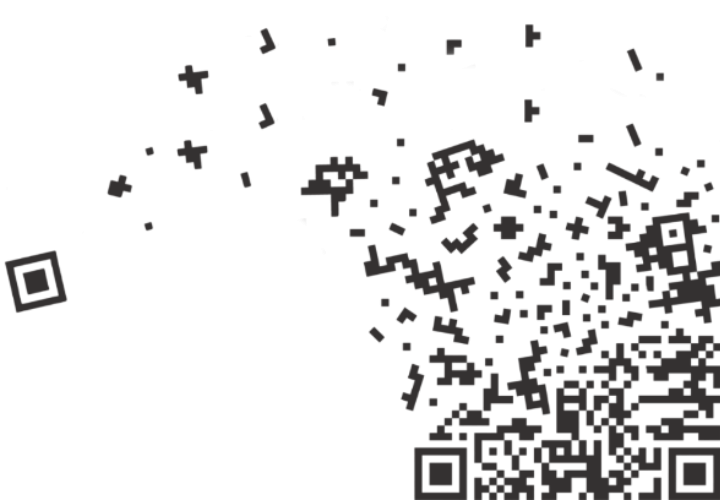
QR code forming muted

IDENTITY AND ACCESS

The identity has been there all along. 

What is permanent. What changed. And what is finally possible.

Every product sold at retail carries a permanent identity , the GTIN,  or global trade item number – and a record of what it is — its the master data. Both have existed since 1974. What changed is that consumer can have access to this data too.

What changed is what the identity can now reach.

Since 1974, that identity served retailers at checkout, supply chain partners during handoffs, auditors verifying claims. Different audiences, different databases, the same GTIN at the center of it all.

The customer holding the product was never part of this picture.

For most of the GTIN’s history, only designated scanners could read it. The POS at retail, the scanner at the warehouse, the reader at the inspection — all connecting to their own siloed database. The customer had no way in.

What changed was the technology stack. A 2D barcode that smartphones could read. A GS1 standard — Digital Link — that defined how product identifiers would be encoded in the URL. A smartphone camera in every pocket. A resolver that routes each scan to whatever the brand has authorized.

Now they are part of the picture.

WHY NOW?

The forces are converging. 

Consumer demand. Industry initiatives. Regulatory pressure.

FSMA

Three forces are arriving at the same moment, and each one is pointing brands toward the same answer.

Consumer demand. Three in four shoppers want detailed product information before they buy. They’re picking up products and reaching for their phones, looking for answers the package can’t give them — where it came from, what’s in it, whether to trust it. They want to know now, in the aisle.

Industry initiatives. By 2027, the world’s largest retailers — Walmart, Target, Carrefour, Tesco — expect every product on their shelves to carry a 2D barcode capable of carrying this connection. The industry calls it Sunrise 2027.

Regulatory pressure. FDA’s FSMA Rule 204 requires traceability data for high-risk foods. The EU’s Digital Product Passport extends similar requirements across product categories. Compliance deadlines are already on the calendar.

The infrastructure is being built either way. The question is whether your products are connected to it — or just compliant with it.


WHAT WE DO?

An atelier for connected products

Design. Build. Steward.

TA

We work with brand owners — in retail, in industry, anywhere a product needs to speak for itself — to design what each product can say, build the connection that lets it say it, and steward the answers over time.

A code on the package — identity and attributes, encoded once. A scan from any smartphone. Verified information, served directly.

No app. No account. Just answers.

WHY TRACE ATELIER?

Standards based. Atelier made.

Credentials. Foundation. Position.

Untitled-15

We are not a platform. We are an atelier. Every connection we build is designed for what it carries and who it speaks to.  

We are a GS1 Solutions Provider — built from the ground up on the standards that have powered every product identifier, every barcode, every transaction since 1974.

Connected products only work if the connection is interoperable and trusted across the supply chain — from the brand to the retailer, the regulator, the supply chain partner, and the customer holding the product. Foundation matters.

We don’t build workarounds. We build on top of the infrastructure that already moves the world’s goods.